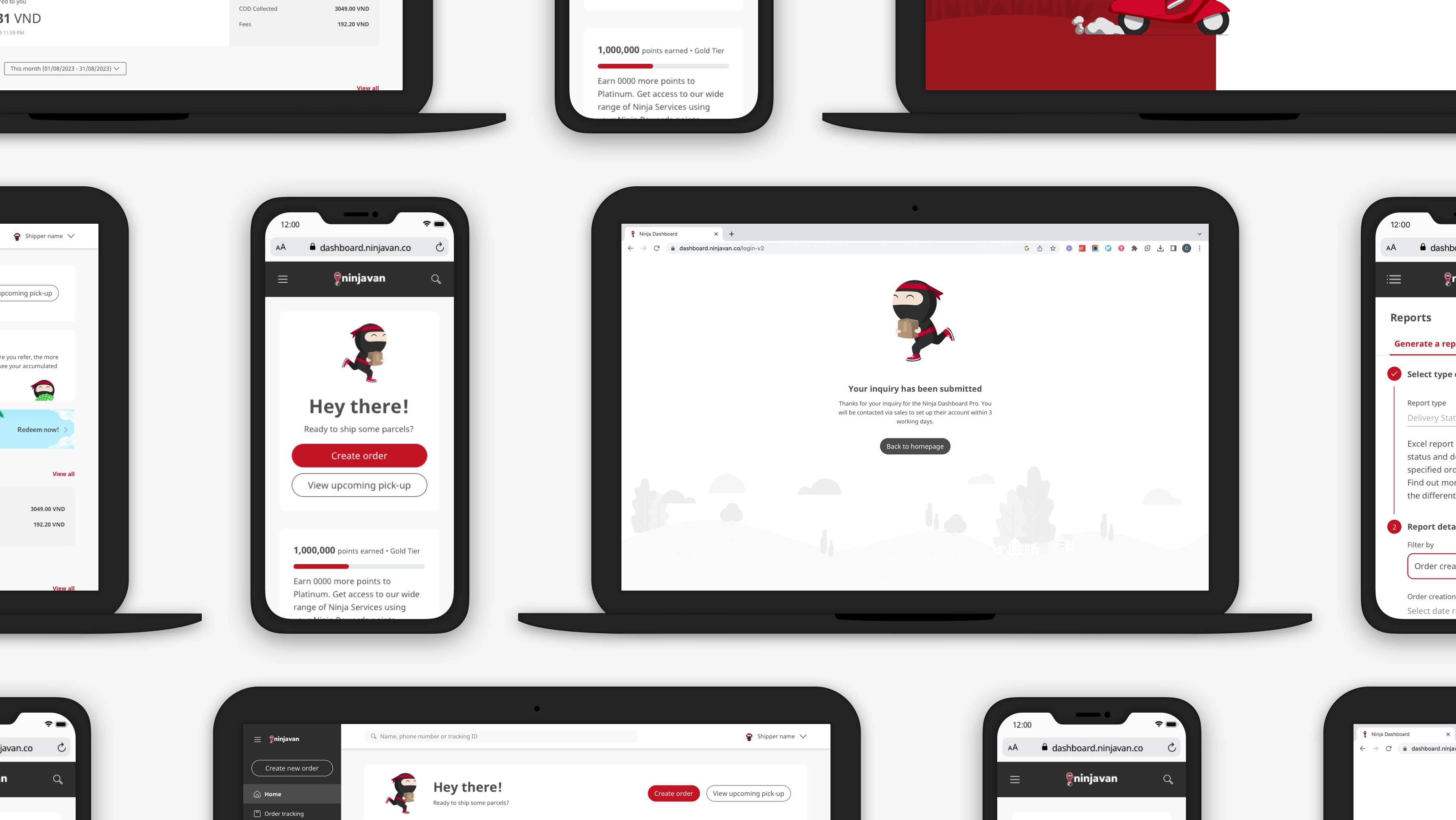
When I joined Ninja Van, the design system was in its infancy, lacking full maintenance and coherence. My role quickly evolved into a crucial driving force behind the system's transformation, guiding it from a fragmented collection of elements to a fully-fledged design language.
This journey involved not only the creation and refinement of components and patterns but also the establishment of a framework that could adapt and grow with the ever-changing landscape of our products and user needs.
The primary challenge was to develop a design system that could accommodate the diverse needs of over 10 products while maintaining consistency and efficiency in the design process.
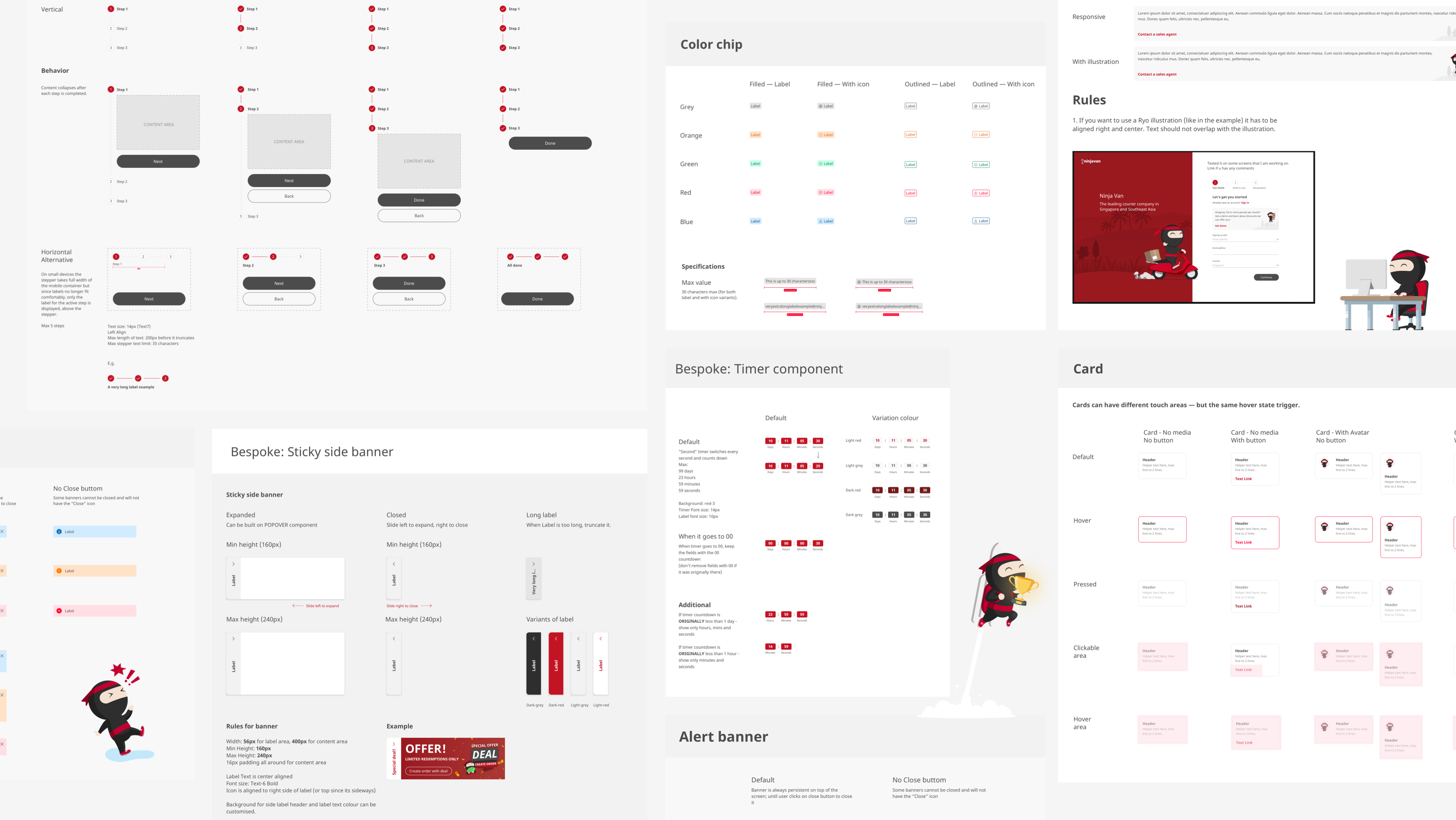
We closely collaborate with designers transitioning their products to the new design system. This involves resolving any issues with existing components and creating new ones when necessary, thereby expanding and enhancing the design system.
A key focus is to document the design system thoroughly, providing a detailed guide for both designers and developers. This ensures consistent usage and understanding across different teams and products.
Continuous improvement, aligning it with industry standards, and ensuring that each element is backed by a clear rationale was key. This commitment to refinement ensures the system remains intuitive and effective for all users.
Being part of a community — The design system’s growth depended on strong collaboration across design and engineering. As part of the team supporting it, I contributed to shaping clear, lightweight communication channels that allowed contributors to ask questions, flag issues, and submit component requests efficiently. This shared space encouraged collective ownership, supported ongoing maintenance, and helped ensure knowledge was distributed rather than siloed.

We measured the impact by adoption of the design system and design consistency across all Ninjavan Products. 7 out of 13 products have been fully migrated to the new design system and 3 are still pending.
There was also a significant reduction in design and development time as developers were able to reuse components.
All verticals using Akira
+100%